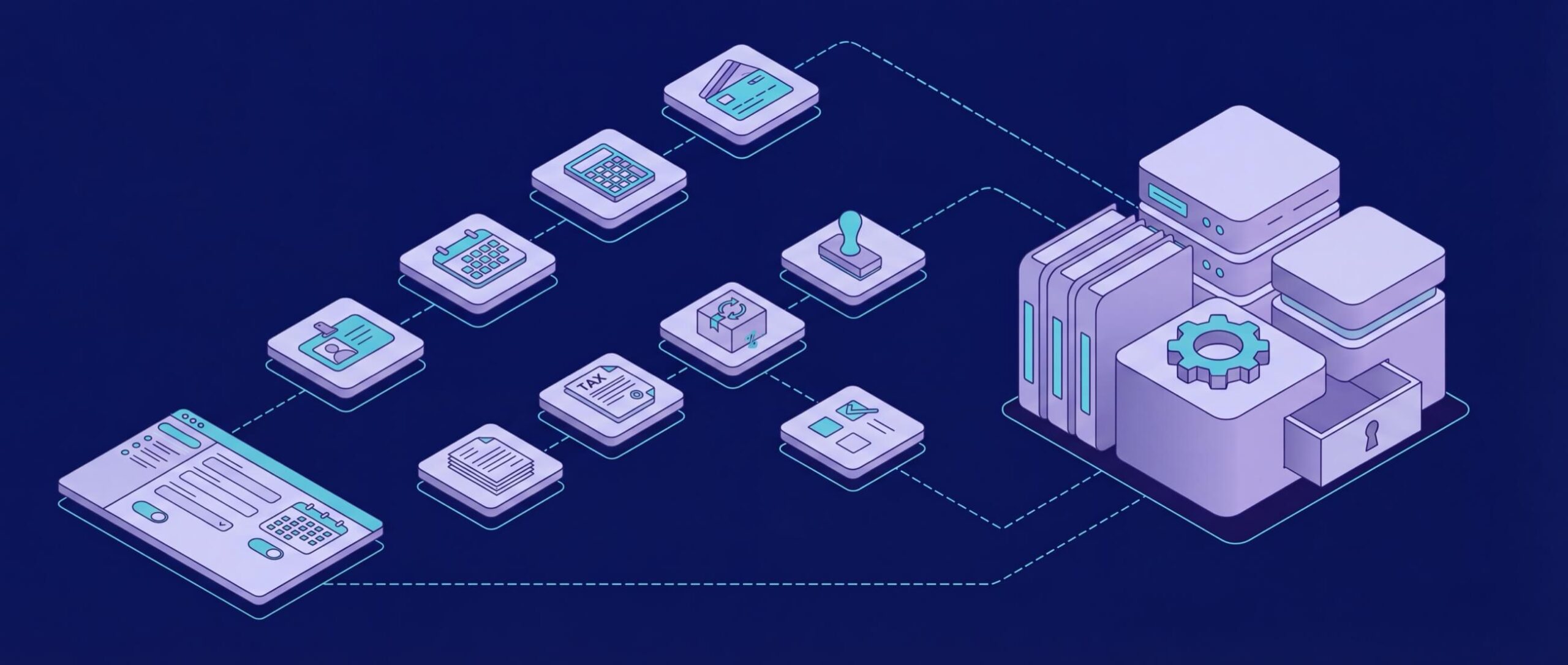
Self hosted payroll software is a deliberate architectural and operational choice, not a convenience feature. For many organizations, this choice naturally leads them to explore open source payroll software, which allows full inspection of code, greater customization, and long-term independence from proprietary vendors. It exists for organizations that want direct control over payroll data, calculation logic, and compliance processes instead of outsourcing them to a third-party SaaS platform. While cloud payroll solutions dominate the market, they are not universally suitable, especially for businesses with strict data ownership requirements or non-standard payroll structures.
This article explains what self hosted payroll software really involves in practice. It covers who it is for, how it compares to cloud payroll, what infrastructure and security it requires, and where the real risks and costs lie. The goal is clarity, not advocacy, so you can decide whether self-hosted payroll is a sensible long-term solution or an unnecessary liability for your organization.
Who Self Hosted Payroll Software Is For (And Who It Isn’t)
Self-hosted payroll only makes sense when an organization is structurally prepared for it. It shifts responsibility inward, which can be either empowering or disastrous depending on context. For teams with sufficient technical and compliance expertise, choosing the best open source payroll software can provide a balance between control, flexibility, and long-term sustainability.
- Organizations with in-house IT capacity: Companies that already manage servers, internal applications, monitoring, and backups can treat payroll as another critical internal system rather than a fragile external dependency.
- Businesses with strict data ownership policies: Some organizations cannot store employee salary data on third-party infrastructure due to internal governance, contractual obligations, or regulatory exposure, making self-hosting a practical necessity.
- Companies with complex payroll logic: Custom bonuses, irregular schedules, unusual benefit structures, or country-specific edge cases are often easier to implement in configurable self-hosted systems than in rigid SaaS platforms.
- Poor fit for very small teams: Small companies usually lack the time, expertise, and tolerance for payroll errors, making vendor-managed SaaS payroll a safer and cheaper option.
- Poor fit for compliance-dependent organizations: If a company expects the software vendor to track, interpret, and apply payroll law changes automatically, self-hosted payroll will introduce risk rather than reduce it.
Self-Hosted vs Cloud Payroll: Control, Cost, and Responsibility
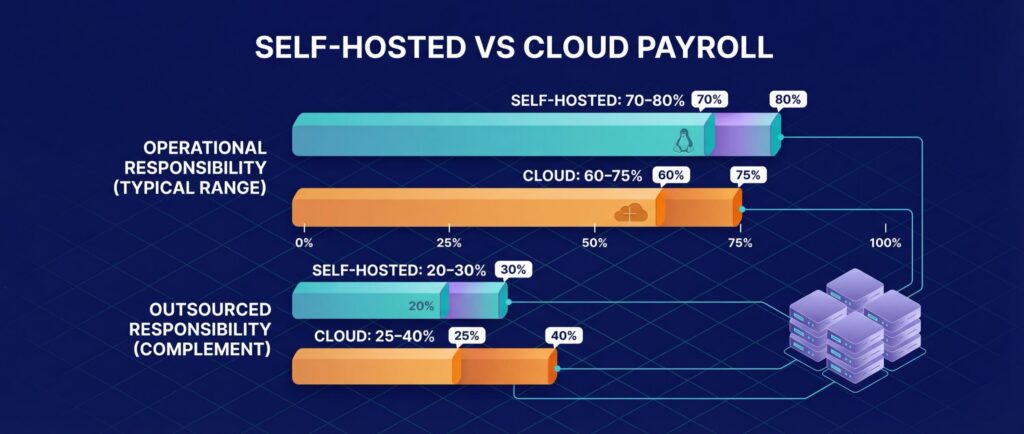
The difference between self-hosted and cloud payroll is not primarily about feature availability, but about ownership of outcomes. Each model optimizes for a distinct operational philosophy and risk distribution. Industry benchmarking shows that self-hosted payroll typically places 70–80% of operational responsibility on internal teams, covering infrastructure reliability, compliance updates, data protection, and incident recovery. In contrast, cloud payroll providers usually absorb 60–75% of these responsibilities, allowing organizations to shift internal focus toward payroll validation, financial oversight, and employee experience rather than system management.
This shift significantly impacts cost structure and risk exposure. Self-hosted payroll concentrates spending on internal expertise, governance, and long-term infrastructure optimization. Cloud payroll redistributes those costs into subscription pricing, while reducing internal technical overhead and compliance maintenance burden. Each model optimizes for a different set of trade-offs.
- Data ownership and access control: Self-hosted payroll keeps all employee data on infrastructure you control, including databases, encryption keys, and audit logs, while cloud payroll places data on vendor-managed systems with limited transparency.
- Cost structure over time: Cloud payroll pricing scales per employee and never stops, whereas self-hosted payroll front-loads effort and stabilizes into predictable infrastructure and maintenance costs once mature.
- Operational responsibility: With self-hosting, uptime, patching, backups, and recovery are your responsibility, while cloud payroll externalizes those tasks but also limits your ability to control timing and behavior.
- Customization depth: Self-hosted systems typically allow deeper customization of payroll logic and reporting, which is difficult or impossible with closed SaaS platforms.
- Audit and compliance evidence: Full control over logs and data structures makes it easier to satisfy auditors, but only if the system is well-documented and consistently maintained.
Core Payroll Features and Compliance Handling
Payroll software is not just about paying salaries. It is a compliance engine that must be correct every single time, without exception.
Payroll calculation engine
The system must handle gross-to-net calculations, statutory deductions, voluntary deductions, bonuses, commissions, overtime, and retroactive corrections reliably across pay cycles. Edge cases such as mid-period contract changes or backdated adjustments must also be processed consistently to avoid cumulative errors over time.
Tax and legal logic
Self-hosted payroll software must support configurable tax rules that reflect current law, including thresholds, exemptions, and reporting formats, with the employer fully responsible for accuracy. This also means having a clear process for updating rules when legislation changes and validating those updates before live payroll runs.
Employee and contract management
Payroll depends on accurate employee records, contract terms, benefits, and historical changes, all of which must be traceable and auditable. Inconsistent or incomplete employment data is a common root cause of payroll discrepancies and compliance issues.
Reporting and exports
Payslips, accounting exports, and regulatory reports must be generated consistently and stored securely for audits and legal retention requirements. Reports should be reproducible on demand so historical payroll decisions can be reviewed and verified long after the original pay cycle.
Security, Data Protection, and Infrastructure Requirements
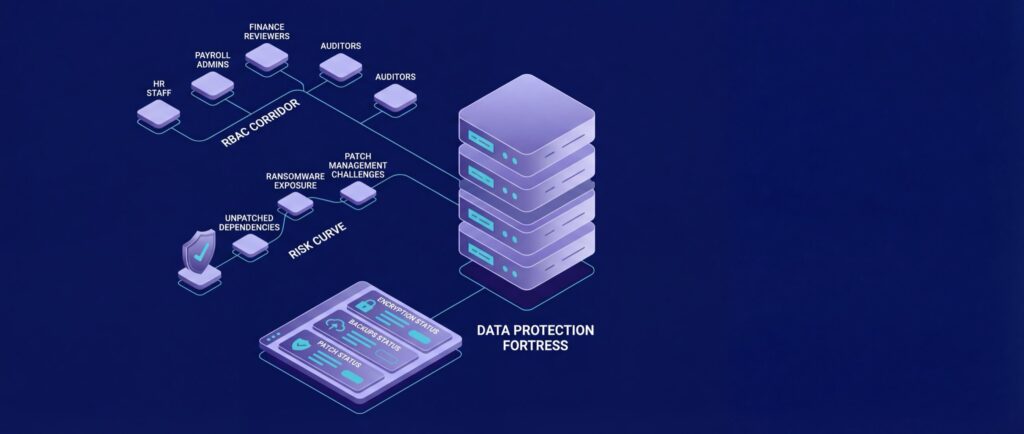
Self-hosted payroll systems concentrate highly sensitive personal and financial data in one place, which raises both the value of the system and the consequences of failure. Unlike cloud payroll, where security responsibilities are shared or abstracted away, self-hosting requires the organization to design and enforce its own security model end to end.
Access control must be deliberately structured so that HR staff, payroll administrators, finance reviewers, and auditors each have clearly defined and limited permissions. Poor role separation is one of the most common causes of accidental data exposure and unauthorized changes. Encryption is equally critical, both for stored data and data in transit, and it must be implemented at the infrastructure and application level rather than assumed by default.
Backups are not optional and must be treated as part of the payroll system itself. Offsite backups, immutable snapshots, and regular restore testing are essential to protect against both data corruption and ransomware. On the infrastructure side, the underlying operating system, database, and runtime environment must be patched consistently. Payroll systems are attractive targets, and unpatched dependencies turn them into liabilities very quickly. Finally, adequate server sizing and predictable performance are required to avoid failed or delayed payroll runs, which have immediate real-world consequences for employees.
Popular Self Hosted Payroll Software Options
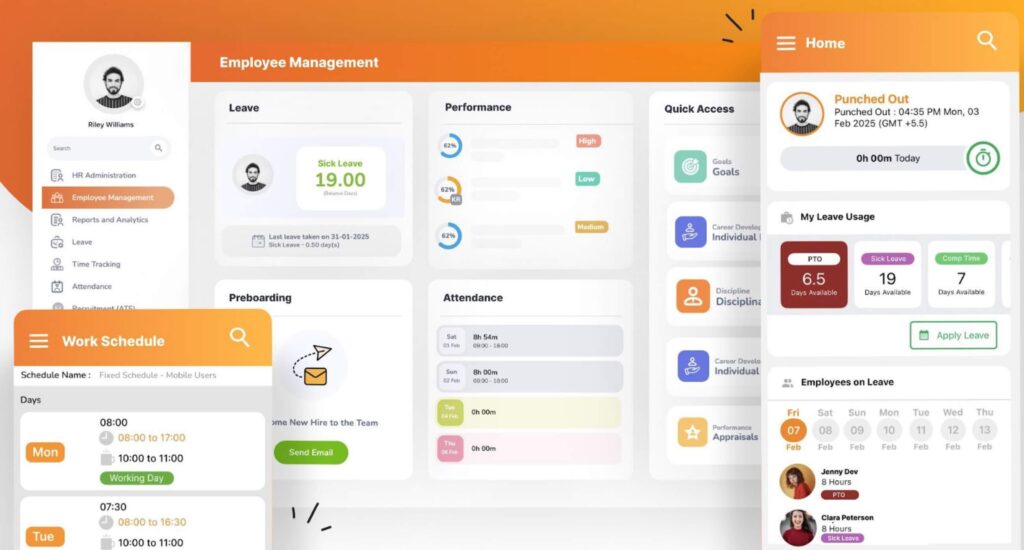
Several self-hosted payroll solutions exist, often as part of broader ERP or HR platforms. Each comes with trade-offs in flexibility, complexity, and support. Most of these tools fall under the category of open source payroll software, meaning their core functionality can be audited, extended, and maintained internally without relying on closed-source licensing models.
- Odoo Payroll: A powerful and highly modular payroll solution integrated into a full ERP stack, offering deep customization at the cost of higher setup and maintenance complexity.
- ERPNext Payroll: A cleaner and more approachable system that covers standard payroll needs well, though complex tax scenarios may require extensions or manual adjustments.
- OrangeHRM Payroll add-ons: An HR-centric platform with payroll extensions that work best for simpler payroll structures rather than advanced or heavily regulated environments.
- Regional and niche tools: Country-specific payroll systems can offer excellent compliance alignment but often come with smaller communities and limited integration ecosystems.
Integration, Deployment, and Ongoing Maintenance
Payroll does not exist in isolation and must fit cleanly into the broader operational stack.
System integrations
Payroll must integrate with accounting systems, HR tools, and time tracking software to avoid manual reconciliation and data inconsistencies. Poor or partial integrations often lead to duplicated data entry, delayed reporting, and subtle errors that only surface during audits or payroll disputes.
Deployment lifecycle
Installation, configuration, test payroll runs, and validation against known-good calculations are essential before production use. Running multiple parallel test cycles helps catch edge cases early and builds internal confidence that the system produces correct results under real conditions.
Ongoing maintenance
Updates, compliance adjustments, backups, monitoring, and documentation are continuous responsibilities that require clear ownership. Without defined processes and accountability, payroll systems slowly drift out of compliance or become fragile due to undocumented changes and missed updates.
Costs, Pitfalls, and Total Cost of Ownership
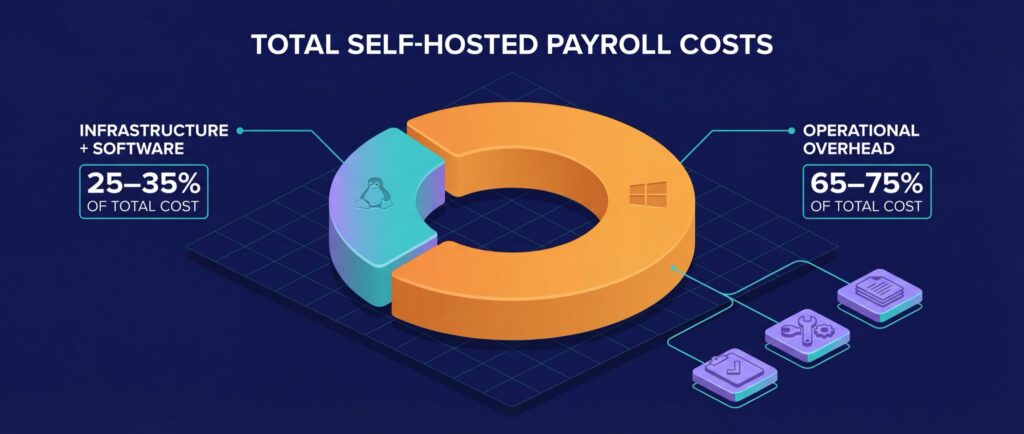
The cost of self-hosted payroll is rarely limited to hosting fees or software licenses. While infrastructure costs can be predictable once the system is stable, indirect costs often dominate over time. Industry analysis shows that organizations typically spend only 25–35% of total payroll system costs on infrastructure and software, while the remaining 65–75% is absorbed by operational overhead such as maintenance, compliance updates, audits, documentation, and incident response. This imbalance highlights why self-hosted payroll often appears inexpensive at first but grows more resource-intensive as regulatory and operational complexity increases.
One of the most common pitfalls is underestimating compliance effort. Payroll law changes do not arrive on a convenient schedule, and delays in implementing them can lead to incorrect payments, penalties, or legal exposure. Another frequent mistake is treating payroll like any other internal application, which leads to insufficient testing, poor change control, and a lack of rollback planning. Payroll errors erode trust faster than almost any other system failure.
Self-hosted payroll tends to make financial sense only when headcount is stable, payroll rules are relatively predictable, and the organization already has strong operational discipline. In those scenarios, investing time in selecting and maintaining the best open source payroll software can reduce long-term dependency costs while preserving full ownership of payroll logic and data. In those cases, the system can become cheaper and more controllable over time than per-employee SaaS pricing. Without those conditions, total cost of ownership grows quietly and often exceeds expectations.
Conclusion
Self hosted payroll software offers maximum control over data, logic, and infrastructure, but it also concentrates responsibility squarely on the organization. It rewards teams that are disciplined, technically capable, and realistic about compliance obligations, while punishing those who underestimate its operational weight. For the right organization, it can be a stable, long-term solution that avoids SaaS lock-in. For others, it introduces unnecessary risk. The correct choice depends less on software features and more on organizational maturity.
Power Your Self-Hosted Payroll With VPS.us
When you choose to run payroll on your own infrastructure, the underlying server needs to be stable, performant, and fully under your control. At VPS.us, you get virtual private servers with dedicated CPU cores, generous RAM, fast NVMe storage, and unmetered traffic, all designed to support business-critical systems like payroll. Their plans give you full root access, strong networking, and the flexibility to install whatever payroll stack you need and tune it to your own security and compliance standards, without vendor lock-in.
A solid choice for a self-hosted payroll deployment is our KVM4-US plan with 4 vCores, 4 GB RAM, and 40 GB NVMe storage, because it balances processing power with memory and disk performance suitable for payroll databases and calculation workloads. This configuration provides the resources to run standard payroll software comfortably and handle reporting, integrations, and audits with minimal contention on CPU and I/O.