
Marketing automation has quietly shifted from a supporting role into core infrastructure. Email campaigns, lead nurturing, behavioral triggers, and lifecycle workflows are no longer optional optimizations but fundamental parts of how companies operate. As digital channels mature, expectations around speed, relevance, and consistency keep increasing, while tolerance for errors or delays keeps shrinking.
At the same time, SaaS pricing models have become more aggressive. Per-contact fees, usage-based billing, and feature gating make long-term costs hard to predict. Many teams reach a point where automation itself is no longer the problem, but the lack of control over how it works and how much it costs becomes one.
Open source marketing automation enters this picture as a structural alternative. Instead of outsourcing core communication systems to black-box platforms, teams regain ownership over workflows, data, and infrastructure. For organizations running serious email programs or operating under regulatory constraints, this control often becomes more important than convenience.
What Marketing Automation Actually Covers
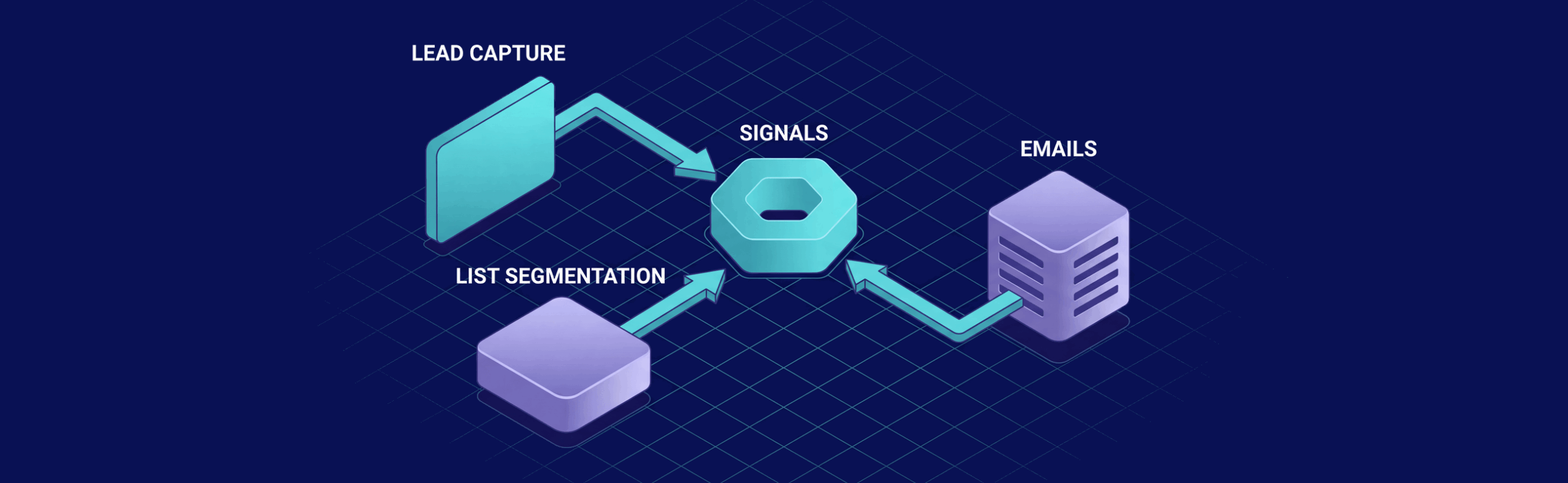
Marketing automation is often described in broad, abstract terms, but in practice it refers to a set of concrete systems that execute repeatable actions based on defined conditions. These systems observe user behavior, apply logic, and trigger responses without requiring manual intervention every time.
Email marketing very often sits at the center of this ecosystem. Even when multiple channels are involved, email tends to be the backbone for nurturing, follow-ups, and transactional communication. Other channels typically extend or support email workflows rather than replacing them entirely.
In practical terms, marketing automation usually includes:
Triggered email campaigns
Messages sent based on specific actions or timing, such as sign-ups, inactivity, or milestones. These campaigns reduce manual effort while maintaining consistency.
List management and segmentation
Organizing contacts into dynamic groups based on attributes or behavior. This is essential for relevance, deliverability, and meaningful reporting.
Lead capture and lifecycle progression
Moving contacts through defined stages as they interact with content or products. Automation ensures that progression rules are applied consistently.
Measurement and reporting
Tracking engagement, conversions, and drop-offs to understand what actually works. Without this layer, automation becomes guesswork.
Understanding this scope matters, because open source tools often prioritize these fundamentals rather than layering on superficial features.
What “Open Source” Means in Marketing Automation

Open source in marketing automation goes beyond the ability to view code. It affects how systems are deployed, modified, and governed over time. This distinction becomes especially important once automation is no longer experimental but business-critical.
True open source tools allow teams to inspect how data is processed and how automation logic is implemented, provided they have the technical expertise to do so. This transparency matters for debugging, compliance, and long-term trust in the system. It also allows organizations to adapt tools to their specific needs instead of bending workflows to fit platform limitations.
Different licensing models matter in practice:
- True open source: Full access to the codebase, freedom to self-host, and the ability to modify functionality. This model maximizes control but also responsibility.
- Open-core or source-available: Core functionality is open, but advanced features require paid licenses. This can limit scalability or force architectural compromises.
- Hosted open source: Open source software offered mainly as a managed service. This reduces operational burden but also reduces control over infrastructure and data.
For teams considering self hosted email marketing software, these differences directly affect long-term flexibility and risk.
Core Capabilities of Open Source Marketing Automation Software
Feature checklists alone do not determine whether open source marketing tools or automation platforms will work in practice. What matters is how reliably those features behave under real-world conditions and how much visibility teams have into their operation.
Open source marketing automation platforms typically focus on a stable core set of capabilities:
- Email campaign management: Creating, scheduling, and automating campaigns with fine-grained control over logic and timing. This includes drip sequences, transactional emails, and behavior-based messaging.
- Segmentation and targeting: Building dynamic segments that update automatically as contact data changes. Proper segmentation is critical for relevance and for avoiding deliverability issues.
- Lead capture and lifecycle automation: Managing forms, landing pages, and workflows that move contacts through defined stages. Automation enforces consistency across teams and time.
- Analytics and tracking: Collecting engagement data and exposing it transparently. Open source tools often allow access to raw data, enabling deeper analysis beyond default dashboards.
Email remains the backbone of these capabilities, especially when predictability and auditability matter more than opaque optimization.
Why Teams Choose Open Source Marketing Automation (And When They Shouldn’t)

Red Hat – State of Enterprise Open Source (2023/2024)
Organizations rarely choose open source for ideological reasons alone. The decision usually follows frustration with cost, rigidity, or lack of transparency in proprietary platforms. Over time, these frustrations accumulate into operational risk.
Common reasons teams adopt open source include:
Data ownership and privacy
Open source tools allow full control over where data is stored, how long it is retained, and who can access it. This matters not only for compliance, but also for internal audits and long-term trust in the system. Teams are not dependent on vendor interpretations of privacy requirements.
Workflow flexibility
Custom automation logic can be implemented without waiting for vendor roadmaps or paying for higher tiers. This is especially important for complex funnels, non-linear journeys, or niche business models. Flexibility also reduces workarounds that tend to accumulate in constrained SaaS tools.
Cost predictability
Infrastructure and maintenance costs are easier to model over time than pricing tied to contact count, events, or feature gates. While open source is not “free,” its costs tend to grow more linearly when infrastructure is planned and monitored properly. This makes budgeting less fragile as automation volume increases.
Integration freedom
Open source platforms are easier to adapt to existing internal systems and data models. There are no artificial API limits or forced upgrade paths. This reduces friction when automation becomes deeply embedded in business processes.
However, open source introduces trade-offs:
- Maintenance responsibility:
Updates, patches, and security fixes do not happen automatically without oversight. Teams must plan for regular maintenance cycles and testing to avoid breaking workflows. - Higher initial effort:
Setup, configuration, and learning curves are steeper than with plug-and-play SaaS tools. Value appears more gradually, which can be frustrating for teams expecting immediate results. - Skill requirements:
Technical expertise is needed to run systems reliably at scale. Without internal skills or trusted partners, complexity can outweigh benefits.
For teams that need immediate results with minimal overhead, managed SaaS tools may still be the better choice.
Common Use Cases for Open Source Marketing Automation Tools
Use cases provide clearer guidance than abstract comparisons when evaluating open source marketing tools. Open source marketing automation tends to succeed where control, customization, and scale matter more than simplicity.
Typical scenarios include:
- Replacing expensive SaaS email platforms: Teams outgrow pricing tied to contact count or send volume and need predictable costs.
- Compliance-driven environments: Organizations must control infrastructure location, access, and data retention policies.
- Custom automation logic: Businesses require workflows that proprietary platforms cannot model cleanly.
- Agency or multi-tenant setups: Managing multiple clients or brands with distinct workflows on shared infrastructure.
In most of these cases, self hosted email marketing software is the primary motivation rather than secondary tooling.
Infrastructure and Hosting Considerations for Self Hosted Automation

Infrastructure decisions directly impact automation reliability and reputation. Weak infrastructure does not fail quietly; it fails publicly through missed sends, delays, or deliverability issues.
Key considerations include:
Email throughput and queue handling
Automation systems must handle sudden spikes in sending volume when campaigns, drip sequences, or triggers fire at once. This means background workers, queues, and rate limits need to be tuned so emails are sent steadily instead of flooding the system. Poor queue handling often shows up as delayed campaigns, stuck jobs, or uneven send patterns that hurt deliverability.
Deliverability and IP reputation
Self-hosting puts primary responsibility for sender reputation on your team, even when third-party delivery services are used. Bounce handling, complaint rates, warming up IPs, and monitoring blacklist status all become part of day-to-day operations. If these signals are ignored, even technically “working” automation can fail because emails never reach inboxes.
Performance and scalability
As contact lists grow and automation logic becomes more complex, database queries and background processing become bottlenecks. Systems that work fine at low volume can degrade quickly once concurrency increases. Planning for indexing, caching, and horizontal scaling early prevents painful retrofits later.
MarTech integration
Automation platforms rarely operate in isolation and must exchange data with CRMs, analytics tools, websites, and internal systems. Infrastructure needs to support reliable APIs, webhooks, and data synchronization without lag or data loss. Tight integration becomes more critical as automation rules depend on real-time signals.
Infrastructure quality becomes a strategic concern once automation volume increases.
Adoption Strategy: How to Implement Without Breaking Existing Systems
Open source marketing automation should be introduced incrementally. Large, sudden migrations increase risk and make troubleshooting difficult.
A practical adoption path often involves:
- Starting with email campaigns only to validate sending and tracking.
- Running open source tools alongside existing platforms for comparison.
- Migrating lists and workflows gradually to avoid disruption.
- Expanding scope only after stability and deliverability are proven.
This approach allows teams to learn the system while maintaining operational continuity.
Long-Term Maintenance and Governance
Open source automation systems require clear ownership. Without governance, complexity accumulates and reliability degrades.
Long-term success depends on:
- Defined responsibility for updates, security patches, and configuration changes.
- Documentation of workflows and automation logic.
- Regular review of deliverability, performance, and data integrity.
- Processes for scaling and modifying automation safely.
Governance ensures automation remains predictable rather than fragile.
Conclusion
Open source marketing automation is not about avoiding subscriptions or chasing novelty. It is about owning the systems that communicate with customers and manage data flows.
For teams willing to invest in infrastructure and discipline, open source tools offer transparency, flexibility, and long-term stability. In the case of self hosted email marketing software, this control often outweighs the convenience of closed platforms.
The right choice depends on priorities and constraints. For organizations that value ownership over abstraction, open source automation provides a sustainable path forward.
Run Your Open Source Marketing Automation Smoothly With VPS.us
At VPS.us, we know that running open source marketing automation software and self hosted email marketing tools means you need a foundation that’s reliable, scalable, and performant. Your automation workflows, email queues, analytics dashboards, and API integrations all depend on infrastructure that doesn’t hiccup under real-world campaign load, and we build our cloud hosting specifically with those production demands in mind.
For most teams implementing open source automation platforms, our KVM4-US plan with 4 vCPU cores, 8 GB RAM, and NVMe SSD storage is a strong fit. This configuration provides dedicated compute for background workers and queue processing, fast disk I/O for mailing lists and campaign logs, and enough memory to handle moderate to large contact lists without throttling. The result is consistent performance, predictable scaling for growth, and the freedom to self-host your stack without unnecessary complexity or ops overhead.