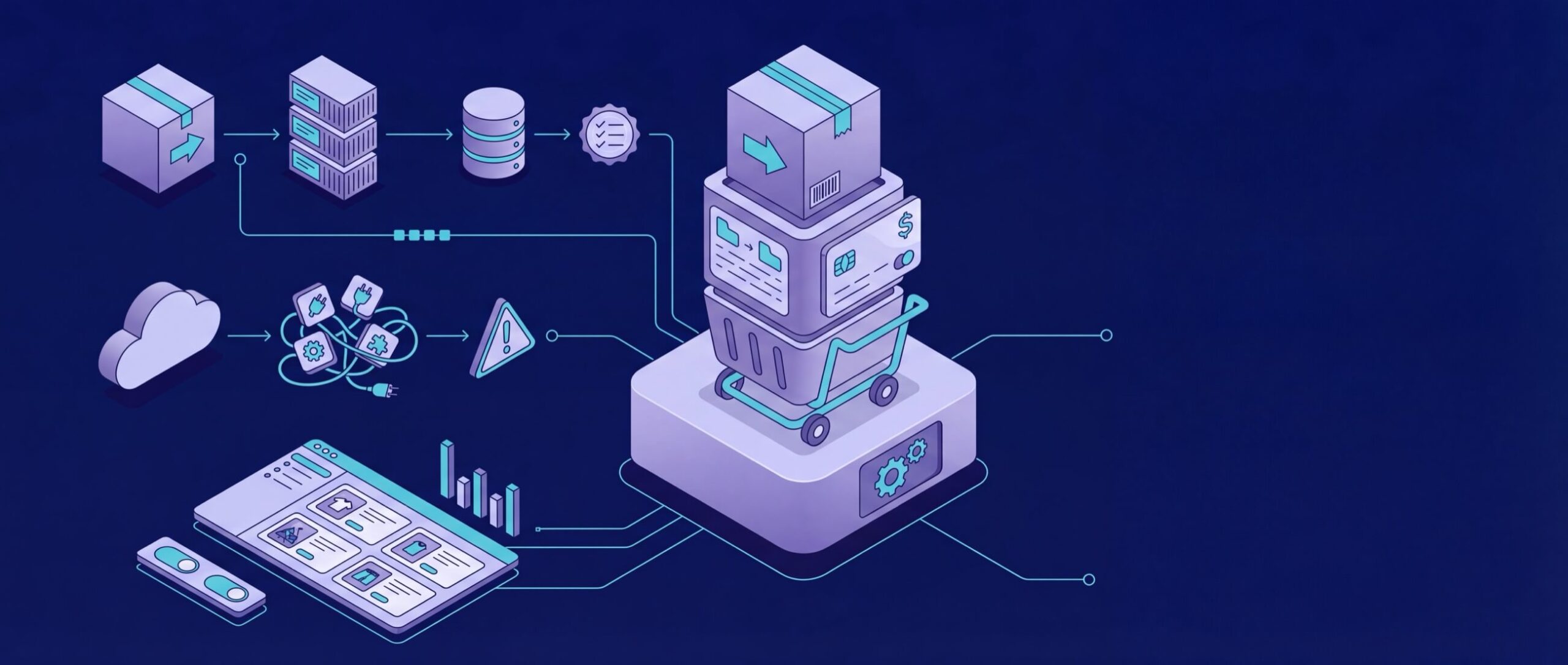
Self-hosted e-commerce means running your online store on infrastructure that you fully control. You choose where the store is hosted, how the server is configured, which software powers the shop, and how customer data is stored and processed. This differs fundamentally from hosted platforms where the provider controls the environment and dictates what you can and cannot change.
The appeal of self-hosting lies in ownership. You are not renting features or constrained by platform roadmaps. Instead, your store becomes part of your business infrastructure, similar to accounting systems or internal tools. This level of control allows deeper customization, better performance tuning, and more predictable long-term costs.
At the same time, self-hosted ecommerce removes the safety net that hosted platforms provide. Updates, security patches, performance monitoring, and backups are no longer abstracted away. Understanding this trade-off early prevents unrealistic expectations and costly mistakes later.
Who Self-Hosted Ecommerce Is Suitable For
Self hosted ecommerce is not a universal solution. It fits specific business profiles, levels of technical readiness, and operational maturity. Understanding whether your situation aligns with these characteristics helps avoid unnecessary complexity.
Business Maturity and Goals
Businesses that benefit most from self-hosting already treat ecommerce as a core revenue channel. These stores often have predictable traffic, established product catalogs, and clear operational needs that hosted platforms cannot easily support. When customization becomes a necessity rather than a preference, self-hosting starts to make sense.
Technical Capacity and Support
Self-hosted ecommerce requires ongoing technical decision-making. This does not mean the owner must be a developer, but someone must be accountable for infrastructure, updates, and troubleshooting. Stores with in-house technical staff or reliable external support are far better positioned to handle this responsibility.
When Self-Hosting Is Not a Good Fit
For early-stage or experimental stores, self-hosting often adds friction without enough upside. If speed, simplicity, and minimal overhead matter more than control, hosted platforms remain a better choice until clear limitations emerge.
Self-Hosted vs Hosted Ecommerce Platforms
Choosing between hosted and self hosted ecommerce is fundamentally a question of control versus convenience. When evaluating the pros of self-hosted e-commerce platforms, control over infrastructure, data ownership, and customization are usually the primary advantages. Both approaches solve real problems, but they optimize for different priorities.
Control and Flexibility
Self-hosted platforms give you full access to the underlying system. You control performance tuning, data structures, checkout logic, and integrations. This flexibility allows you to adapt the store as business needs evolve, rather than waiting for platform features or workarounds.
Convenience and Abstraction
Hosted platforms abstract infrastructure and maintenance away from the store owner. Updates, backups, and security are handled automatically. In exchange, customization is limited and long-term costs often increase as revenue grows.
Long-term Implications
Hosted platforms scale by enforcing higher pricing tiers and feature limits. Self-hosted platforms scale by adjusting infrastructure. The former prioritizes simplicity, while the latter prioritizes ownership and adaptability.
Core Components of a Self Hosted Ecommerce Stack
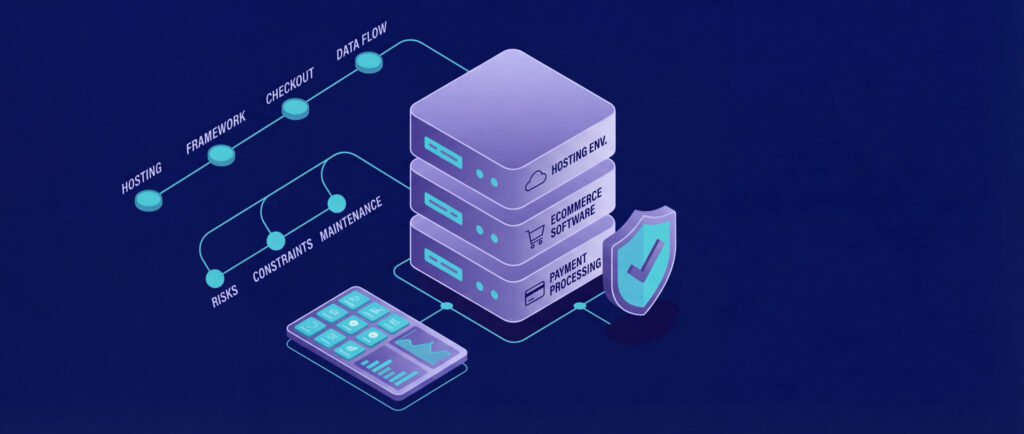
A self-hosted e-commerce store is a system made up of multiple interdependent components. Each one affects performance, reliability, and security.
- Hosting environment and server requirements: The server must handle concurrent users, database writes, and checkout operations without slowing down. As traffic grows, resource allocation and performance tuning become increasingly important.
- Ecommerce software or framework: This defines how products, carts, orders, and customers are managed. The software choice influences extensibility, upgrade paths, and long-term maintenance effort.
- Payment processing and integrations: Payment gateways, shipping providers, and tax services must integrate securely and reliably. Poor integrations often become failure points during peak sales periods.
- Security, backups, and updates: You are responsible for protecting customer data, maintaining backups, and applying updates. Neglecting this layer exposes the business to legal and financial risk.
Each component adds flexibility, but also increases the need for coordination and planning.
Popular Self-Hosted E-Commerce Platforms and Software
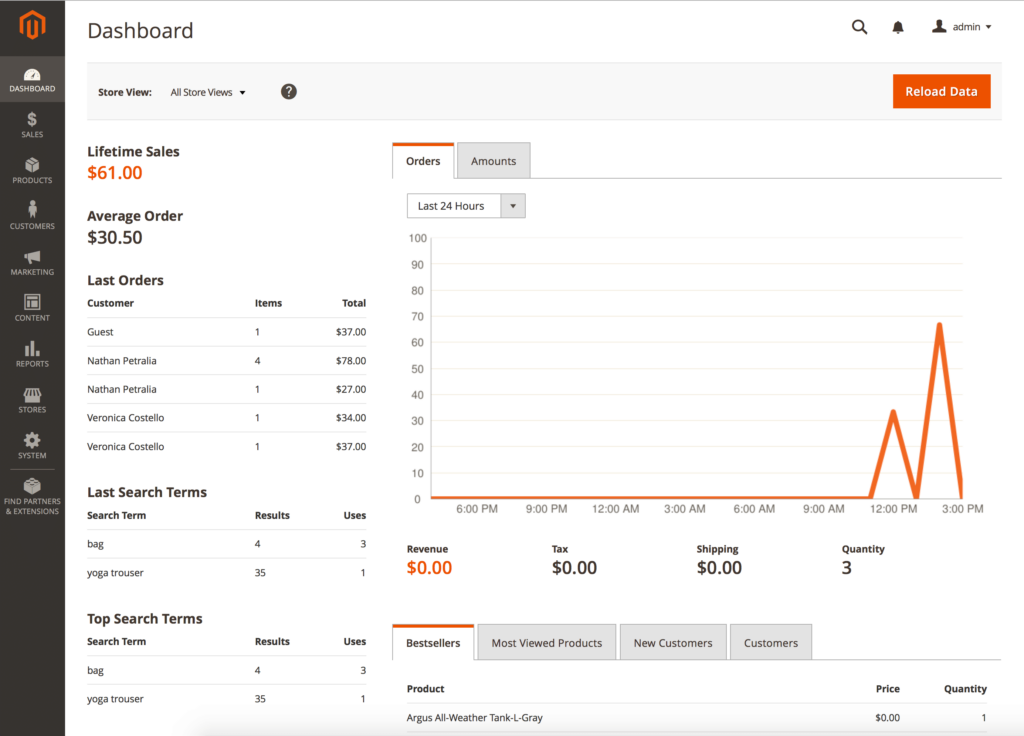
Self hosted ecommerce solutions come in several broad categories, each with strengths and trade-offs. One of the most common categories includes open source ecommerce platforms, which allow store owners to inspect, modify, and extend the codebase according to their business needs.
- Open-source ecommerce solutions: These provide complete storefront functionality with plugins and themes. What qualifies as the best open source ecommerce platform depends heavily on the store’s size, technical capacity, and long-term customization requirements. They allow relatively fast deployment while still offering customization beyond hosted platforms. For some businesses, the best open source ecommerce platform is the one that balances extensibility with an active development and support ecosystem.
- CMS-based ecommerce systems: These combine content management and ecommerce in one system. They are useful for businesses where marketing content and store functionality are tightly connected.
- Framework-based or headless setups: These separate front end and back end, offering maximum flexibility and performance. They require more development effort but scale well for complex stores.
- When each category makes sense: Turnkey solutions suit smaller teams, while framework-based systems suit businesses with long-term customization needs and technical resources.
Choosing based on business needs rather than popularity avoids painful migrations later. This is especially important when evaluating open source ecommerce platforms, since flexibility and long-term maintainability often matter more than initial setup speed.
Hosting Requirements for Self Hosted Ecommerce

Hosting plays a central role in ecommerce performance and reliability. Unlike static websites, ecommerce stores generate continuous database activity and session handling.
Before choosing a hosting type, it is important to understand how ecommerce workloads behave and where bottlenecks usually appear.
- Resource isolation and performance: VPS hosting provides dedicated CPU and memory, which prevents other users from affecting store performance. This stability is critical during checkout.
- Scalability needs: Traffic spikes during promotions or seasonal events require headroom. Hosting that cannot scale smoothly limits revenue potential.
- Reliability and uptime: Downtime directly translates into lost sales. Monitoring, backups, and recovery options matter more for ecommerce than for most sites.
Hosting decisions should be made with growth in mind, not just current traffic.
Payments, Checkout, and Compliance
Payments are both technically sensitive and legally regulated. A self-hosted store must handle this layer carefully to maintain trust and compliance.
Before implementing payment systems, store owners should understand the responsibilities involved and the trade-offs between different gateway models.
- Payment gateways and security: Gateways handle card data, but secure integration is still required. Misconfiguration can expose customer information.
- Compliance responsibilities: PCI standards still apply when third-party payment gateways are used, but the scope is reduced because sensitive card data is handled by the gateway rather than your server. Store owners are still responsible for secure integration, proper configuration, and maintaining compliance over time rather than treating it as a one-time requirement.
- Checkout performance and trust: Fast checkouts, SSL encryption, and clear messaging reduce cart abandonment and improve conversions.
Payment infrastructure should be treated as critical business infrastructure.
Security, Maintenance, and Updates

Security and maintenance are continuous obligations in self hosted ecommerce. They require planning, monitoring, and discipline rather than one-time setup.
Before launching a store, it is important to understand what ongoing work looks like in practice.
- Preventive security: Regular updates, hardened configurations, and access controls reduce exposure to vulnerabilities.
- Monitoring and backups: Automated backups and performance monitoring protect against data loss and downtime. Backups must be tested, not assumed.
- Operational reality: Maintenance is ongoing work. Ignoring it accumulates risk until failures occur.
Stores that plan for maintenance early experience fewer crises later.
Costs and Long-Term Economics of Self-Hosted Ecommerce
Self-hosted ecommerce involves both visible and hidden costs.
Infrastructure costs include hosting, storage, backups, and security tools. Development costs include setup, customization, and ongoing fixes. As traffic grows, costs increase with resource usage and complexity.
The advantage is cost control. You are not forced into higher tiers simply because revenue grows. Over time, many stores find self-hosting more economical than feature-based hosted pricing.
Understanding total cost of ownership helps align expectations and budgets.
Common Mistakes When Going Self-Hosted
Many self-hosted ecommerce projects fail due to planning errors.
Underestimating technical effort leads to neglected updates and instability. Choosing tools based on hype instead of fit increases complexity. Ignoring performance early results in poor user experience and lost sales.
Overengineering before the business justifies it wastes resources. Successful stores evolve their stack alongside growth, not ahead of it.
When Self-Hosted Ecommerce Becomes the Right Move
Self-hosting becomes attractive when the platform limits block growth.
Custom pricing models, checkout flows, or integrations often require full control. Businesses that depend on data ownership or specialized workflows benefit most. High-growth stores also gain from predictable infrastructure costs.
Timing matters. Migrating too early creates unnecessary overhead. Migrating too late forces rushed decisions. Strategic planning makes the transition smoother.
Conclusion
Self-hosted ecommerce offers long-term flexibility, independence, and control. The pros of self-hosted e-commerce platforms include long-term flexibility, independence, and control over both infrastructure and business logic. It allows your store to evolve alongside your business without artificial constraints. In return, it demands operational responsibility and technical awareness.
For businesses prepared to own their infrastructure, self-hosting becomes a strategic advantage rather than a burden. The key is entering with clear expectations and deliberate planning.
Host Your Self-Hosted Ecommerce Store With vps.us
VPS.us provides VPS hosting suited for businesses that need control, isolation, and predictable performance. Our KVM4-US plan offers 4 vCPU cores, 4 GB of RAM, NVMe storage, and isolated resources, making it a practical starting point for self-hosted ecommerce stores handling active carts, checkouts, and databases. This type of VPS allows full control over the operating system, web server, database configuration, and caching layers.
With root access and dedicated resources, VPS.us hosting supports performance tuning, security customization, and scalable growth as traffic increases. This makes it suitable for ecommerce businesses that want ownership of their infrastructure without platform-imposed constraints.