
Apache and NGINX are the two titans of the web server world. Both are open-source, reliable, and capable of handling massive workloads, but they follow very different design philosophies. Apache focuses on flexibility and deep customization, while NGINX emphasizes high concurrency, efficiency, and modern scalability.
In this comparison, you’ll learn how each performs across architecture, configuration, security, and content handling. We’ll also look at their roles in WordPress hosting and which one might best suit your website’s needs.
Overview and Core Architecture
Every web server’s strength starts with its architecture. Apache and NGINX were built decades apart to solve different challenges.
Apache, launched in 1995, relies on a process-driven model where each request is handled by a separate thread or process. It offers multiple Multi-Processing Modules (MPMs) for flexibility:
Apache MPMs
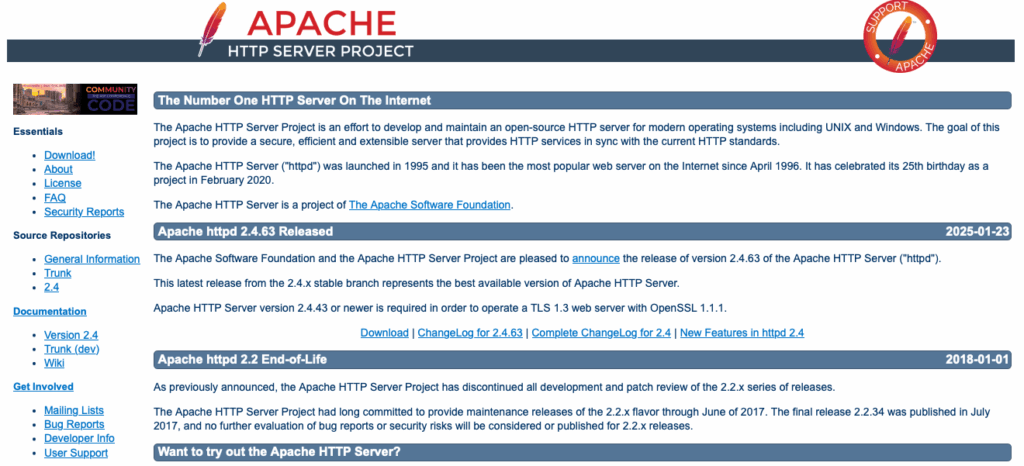
Apache uses different processing modules to handle connections efficiently.
- Prefork: Keeps multiple idle processes ready, each handling one request at a time. It’s very stable and compatible with older software but uses more memory.
- Worker: Uses multiple threads per process for better scalability.
- Event: Designed for persistent connections and improved performance.
NGINX
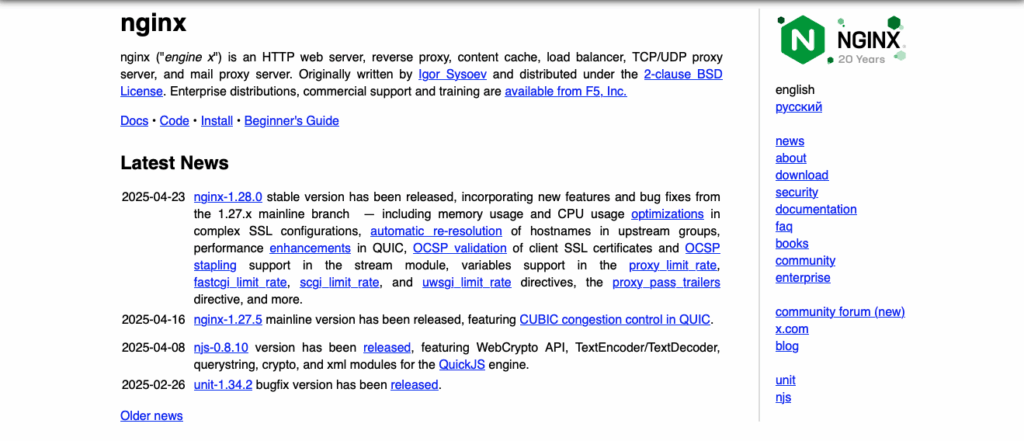
NGINX, created in 2004, uses an event-driven and asynchronous architecture. Rather than assigning each connection its own thread, it manages thousands of connections simultaneously with minimal resources. This allows NGINX to handle heavy traffic loads gracefully and makes it the preferred choice for modern, high-performance environments.
Performance and Content Handling
Performance is the most common point of comparison between Apache and NGINX. Their design philosophies directly affect how they deliver content and respond to load. In any Apache vs NGINX comparison, performance remains the deciding factor for most users evaluating which server can better handle real-world traffic and scalability demands.
Apache performs exceptionally well with dynamic content. It integrates seamlessly with interpreters like PHP through modules such as mod_php, allowing the web server to process code internally. This is convenient for developers and CMS-based websites but can be resource-heavy under large traffic spikes.
NGINX excels with static content. It can deliver images, videos, and other static assets at remarkable speed using far fewer resources. It also outperforms Apache in handling concurrent connections, making it ideal for media-heavy or high-traffic websites.
Common real-world setup
Many administrators combine both to maximize performance.
- NGINX acts as a reverse proxy, serving static files and caching requests.
- Apache handles dynamic content such as PHP scripts or database queries.
This hybrid model delivers NGINX’s speed with Apache’s flexibility and compatibility. Whether you choose Apache or NGINX for your hosting setup, your decision will likely depend on the balance between ease of management and performance optimization.
Configuration, Modules, and Flexibility
Configuration plays a major role in how easily a server can be managed, tuned, or extended. Apache is famous for its flexibility and its ability to customize settings on a per-directory basis through .htaccess files. This feature is invaluable in shared hosting, where users may not have administrative access.
NGINX uses a centralized configuration system that avoids per-request file lookups, making it faster and more secure but less convenient for shared environments.
Apache Configuration Highlights
Apache’s modular design enables a wide range of extensions.
- Supports dynamically loadable modules like mod_rewrite, mod_ssl, and mod_security.
- Allows per-directory overrides, ideal for CMS platforms and shared hosting.
- Slightly slower due to .htaccess file checks on every request.
NGINX Configuration Highlights
NGINX focuses on simplicity and speed.
- Uses centralized configuration files for efficiency and security.
- Modules are usually compiled in at build time for stability, although newer NGINX versions also support dynamically loadable modules for added flexibility.
- No per-directory overrides, reducing runtime overhead.
In short, Apache provides more flexibility, while NGINX delivers cleaner, faster performance for experienced administrators.
Security, Proxying, and Scalability
Security and scalability are core concerns when choosing a web server. Both Apache and NGINX have excellent track records, but their approaches differ based on architecture.
Apache’s long history has produced a rich set of security modules and detailed access control features. It supports tools like mod_security and mod_evasive for protection against brute-force attacks and malicious requests. However, its complexity can lead to configuration errors if not managed carefully.
NGINX benefits from a simpler, more predictable design. It uses fewer processes and consumes fewer resources, minimizing its attack surface. Its built-in rate limiting, access control, and SSL management make it a strong front-line choice for protecting backend servers.
Scaling Perspective
Each server handles scaling differently.
- Apache: Scales vertically, benefiting from more CPU and RAM.
- NGINX: Scales horizontally, distributing workloads across multiple nodes or containers.
This makes Apache ideal for standalone servers and smaller setups, while NGINX thrives in distributed, cloud-native, and containerized infrastructures.
Apache vs NGINX WordPress Performance

When comparing Apache vs NGINX WordPress setups, performance can vary greatly depending on how each server is configured and optimized. Apache is the traditional choice for WordPress hosting because it works perfectly with .htaccess, allowing plugins to modify URL structures, caching rules, and redirects without touching the main configuration. This makes it the go-to option for beginners and shared hosting providers.
NGINX, on the other hand, provides superior speed once configured properly. It handles static resources more efficiently, reduces time-to-first-byte, and improves page load speeds under high concurrency. By using PHP-FPM and FastCGI caching, NGINX can outperform Apache by a significant margin in large-scale WordPress environments.
These are the best use cases for each option:
- Apache: Smaller blogs, shared hosting, and plugin-heavy setups.
- NGINX: High-traffic WordPress sites, media-heavy pages, and optimized environments.
- Hybrid: NGINX in front, Apache or PHP-FPM behind, for speed and compatibility combined.
For most users, Apache provides convenience, but for developers and performance-oriented businesses, NGINX’s optimization potential is worth the effort.
Ecosystem and Use Cases
Apache and NGINX each dominate different parts of the hosting landscape. Their ecosystems have evolved based on the needs of their typical users.
Apache Ecosystem
Apache remains the foundation of many traditional hosting environments. It’s widely supported by control panels like cPanel and Plesk, integrates easily with content management systems, and powers countless small-to-medium business websites. Its module library and legacy compatibility make it a reliable choice for maintaining older applications.
NGINX Ecosystem
NGINX is now the preferred choice for high-performance, cloud, and containerized infrastructures. It is used by major tech companies, streaming platforms, and SaaS applications. Its efficiency and scalability make it perfect for microservices, reverse proxying, and API delivery.
If you rely on shared hosting or older CMS software, Apache remains the natural fit. But if you’re working with modern frameworks or need to handle massive concurrent traffic, NGINX is designed for exactly that.
Pros, Cons, and Choosing the Right Server
Each server has clear strengths and weaknesses that determine its suitability. Understanding these will help you make a decision based on your project’s priorities.
Both NGINX and Apache are powerful, but their strengths lie in different areas. Understanding their advantages and limitations helps you decide which aligns best with your website or application.
Apache Pros
Apache has been around for decades and remains one of the most versatile and well-documented servers. It’s especially popular for smaller projects and shared hosting environments where flexibility matters.
- Mature, flexible, and stable.
- Works seamlessly with shared hosting and control panels.
- Supports dynamic modules and detailed access control.
Apache Cons
While flexible, Apache’s architecture can be resource-heavy under pressure. It’s not always the best choice for sites that handle large volumes of static content or thousands of concurrent users.
- Consumes more system resources under heavy load.
- Slower for static content and concurrent requests.
NGINX Pros
NGINX was built with modern performance requirements in mind. It shines in environments where speed, scalability, and efficient resource use are critical.
- Extremely efficient with static content.
- Handles thousands of concurrent connections smoothly.
- Ideal for reverse proxying and caching.
NGINX Cons
Despite its strengths, NGINX sacrifices some of Apache’s flexibility. It can be harder for users who rely on per-directory configuration or specific dynamic modules.
- No .htaccess for per-directory configuration.
- Fewer dynamic module options.
When Deciding, Consider Your Environment

Before making a decision between Apache or NGINX, consider how your website handles static and dynamic content and what kind of traffic patterns it faces. Each server fits different needs, so it’s worth matching your choice to your project type.
- For simple websites and shared hosting: Apache is the easy, reliable choice.
- For modern web apps and heavy traffic: NGINX offers unmatched efficiency.
- For mixed workloads: Use both — NGINX in front, Apache or PHP-FPM behind.
Final Words
When comparing Apache vs NGINX, it’s clear that both have evolved into highly optimized web servers catering to different needs and performance goals. NGINX and Apache both stand as pillars of modern web infrastructure. Apache’s strength lies in its flexibility and deep integration with existing hosting tools, while NGINX offers exceptional performance, scalability, and resource efficiency.
Your choice depends on your specific requirements: small-scale or traditional projects benefit from Apache’s ease and modularity, while large-scale, high-performance systems thrive under NGINX. Many successful setups combine both, using NGINX for delivery speed and Apache for complex back-end logic.
Host smarter, faster, and more efficiently with VPS.us
At VPS.us, we provide powerful VPS hosting optimized for both NGINX and Apache environments. Our KVM-based servers include high-speed NVMe storage, dedicated vCPU cores, and full root access, giving you total control over your web stack. The KVM4-US plan, featuring 4 vCPU cores, 8 GB RAM, and 200 GB NVMe storage, offers the perfect foundation for high-performance websites, whether you run Apache, NGINX, or a hybrid configuration. Choose VPS.us to build, optimize, and scale your projects with confidence.