
n8n vs Node-RED in one line: pick n8n for API-heavy business automation and SaaS integrations (400+ integrations, queue mode, built-in AI nodes); pick Node-RED for IoT, hardware and event wiring on tiny devices (it runs in about 256 MB of RAM where n8n wants 1 GB+); pick Huginn only if you specifically want Ruby-based monitoring agents. This article compares all three self-hosted options in depth – architecture, performance limits, feature gaps and who each one suits – so you can decide based on your actual workload.
Key Takeaways:
- n8n: Best for API-heavy workflows and SaaS integrations. Offers a visual editor, 400+ pre-built integrations, and scalability with Queue Mode. Requires DevOps expertise to manage database bottlenecks and scaling.
- Node-RED: Ideal for IoT and edge computing. Lightweight, supports hardware protocols like MQTT, and works well on devices like Raspberry Pi. Limited for complex SaaS workflows due to its single-threaded runtime.
- Huginn: Excels in web scraping and monitoring tasks. Built on Ruby on Rails, it uses YAML-based agents for long-term, background jobs. Resource-intensive and not suited for real-time processing.
Who Should Use What?
- n8n: For SaaS developers orchestrating cloud services or AI workflows.
- Node-RED: For IoT engineers automating edge devices or industrial systems.
- Huginn: For solo operators creating custom monitoring systems or scraping data.
Quick Comparison:
| Feature/Tool | n8n | Node-RED | Huginn |
|---|---|---|---|
| Focus | SaaS API workflows | IoT and edge computing | Monitoring and web scraping |
| Ease of Use | Visual editor, JavaScript | Visual editor, lightweight | YAML configuration |
| Scalability | Redis + Postgres for scaling | Horizontal scaling needed | Limited, resource-heavy |
| Best For | SaaS and AI integrations | IoT workflows, edge devices | Long-term monitoring tasks |
Each tool has its strengths and limitations. Read on to see how their architectures, performance, and use cases compare, and find the perfect fit for your automation needs.
Architecture and Design Philosophy
The architecture of a tool plays a crucial role in its ability to handle concurrency, support various protocols, and manage potential bottlenecks. These design decisions directly impact how well the tool performs under traffic spikes and sustained workloads.
Let’s take a closer look at how the architecture of each tool shapes its performance and scalability.
n8n: Visual Workflows with JavaScript Flexibility
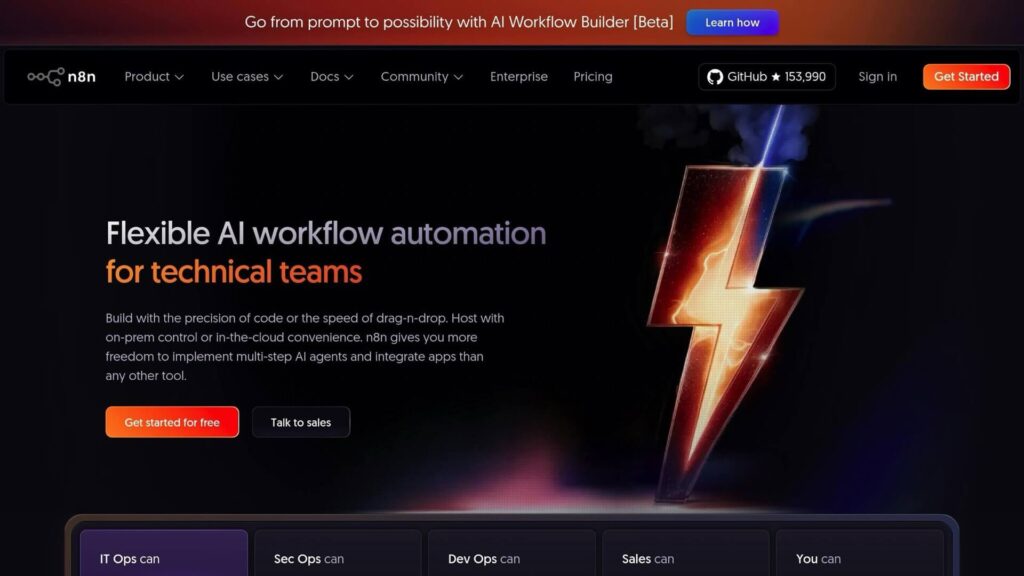
n8n operates on a Node.js foundation, presenting automation through a visual directed graph interface. With over 350 SaaS integrations, it allows users to build workflows, but extending its functionality often requires JavaScript expressions or custom code nodes. For scaling, n8n offers a Queue Mode that uses Redis and multiple workers, enabling horizontal scaling. However, PostgreSQL I/O frequently becomes the bottleneck during heavy loads. Eduard Stal, a contributor to n8n, highlights:
To maintain performance in high-volume workflows, aggressive pruning of execution data is essential. Without this, the database can quickly become bloated, slowing down the entire system. It’s also worth noting that n8n’s Faircode license restricts commercial redistribution, which can influence operational costs and scaling strategies in production.
🚀 Launch Your First n8n Automation in Under 5 Minutes
Your quick start checklist
Node-RED: Event-Driven Processing for IoT
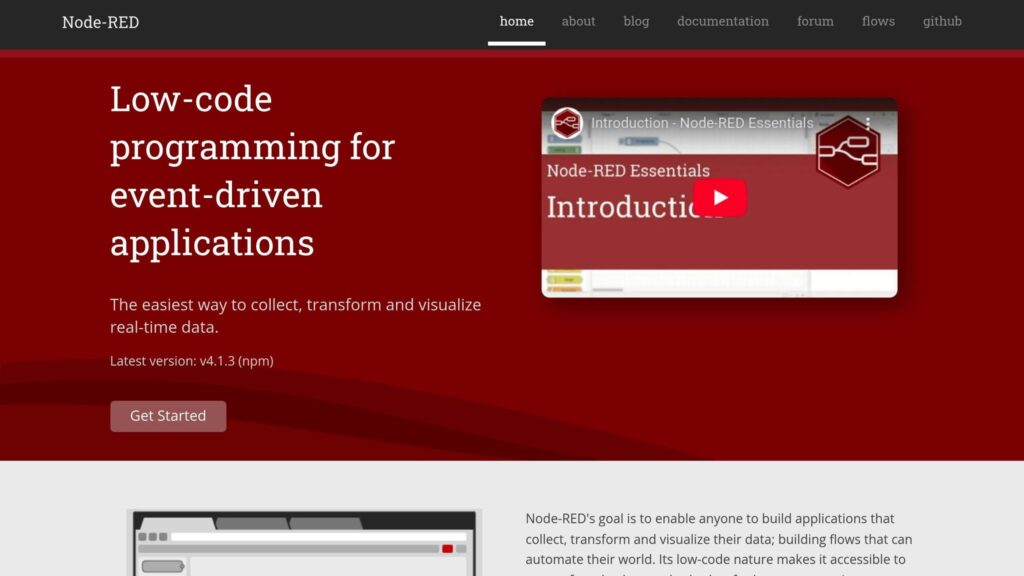
Node-RED is designed for event-driven, real-time data streams, with built-in support for IoT protocols like MQTT, Modbus, and OPC-UA. Its Node.js runtime, however, is single-threaded, meaning CPU-intensive tasks require deploying multiple instances to achieve true parallelism. Additionally, as workflows grow beyond 100 nodes, the visual canvas can become unwieldy, making debugging and maintenance more challenging. SaaS Hub observes:
Despite these challenges, Node-RED boasts a vast ecosystem with over 5,000 community-contributed nodes. Its lightweight design allows it to run efficiently on devices like Raspberry Pi and industrial gateways. Fully open-source under the Apache-2.0 license, Node-RED places no restrictions on commercial use. These architectural traits shape its scalability and operational costs in production environments.
Huginn: Agent-Based Monitoring in Ruby
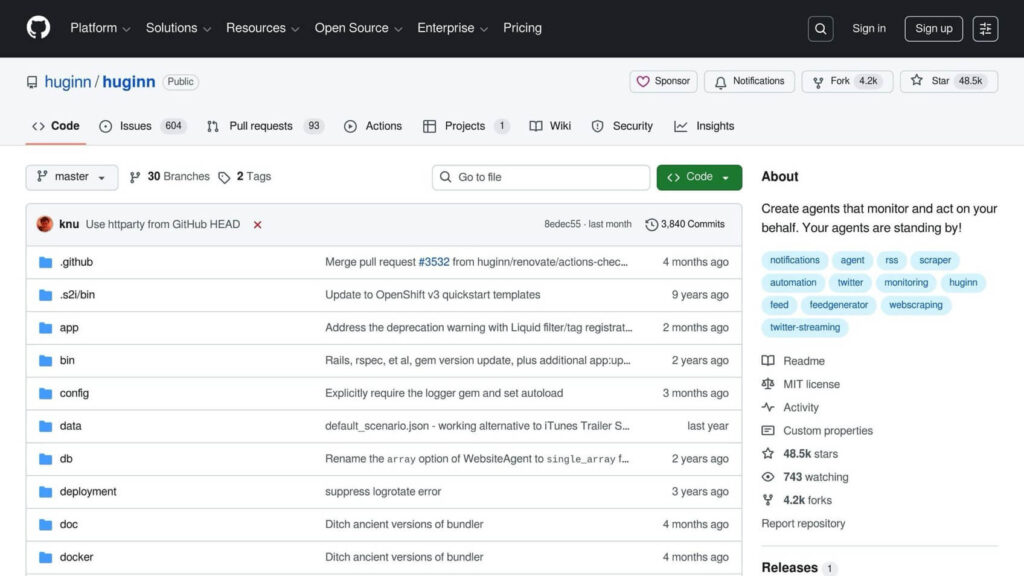
Huginn relies on a Ruby on Rails backend, where agents – defined in YAML – act as autonomous units. Each agent is stateless, polling external sources, processing data, and emitting events to downstream agents. This decentralized design enhances fault tolerance, as failures are isolated. However, the Rails stack is resource-heavy, as noted by Hrafn Thorvaldsson:
Huginn is well-suited for tasks like scheduled checks and web scraping but struggles with real-time processing due to its reliance on polling. Additionally, Ruby dependency conflicts can make upgrades challenging. Unlike n8n and Node-RED, Huginn lacks a drag-and-drop interface, requiring users to configure workflows by editing YAML files. This increases the cognitive load, as tracing data flow depends on examining event logs rather than using a visual representation. These architectural decisions significantly affect its scalability and operational complexity in production settings.
Performance Limits and Scaling Constraints

Each of the three tools comes with its own set of performance challenges when operating under heavy load. Recognizing these bottlenecks is vital for planning capacity, setting up accurate monitoring thresholds, and avoiding production hiccups. Let’s break down the specific constraints of each tool and how they handle scaling.
n8n: Queue Mode and Database I/O Challenges
n8n can process up to 220 workflow executions per second on a single c5a.large instance with 4GB RAM. To go beyond this limit, you’ll need to switch to queue mode, leveraging Redis and multiple workers. However, PostgreSQL quickly becomes a bottleneck in this setup. Worker concurrency can overwhelm the database connection pool, leading to delays and failures as workflows time out.
Another limitation is that queue mode doesn’t support filesystem-based binary data storage. This forces the use of S3-compatible external storage. Without aggressive pruning of execution data, the Postgres database can bloat, slowing down queries. Additionally, mismatched encryption keys between main instances and workers can disrupt stored credentials. These factors make n8n a better fit for teams with strong DevOps expertise, as managing database performance and distributed setups requires ongoing attention.
Node-RED: Single-Threaded Runtime Limitations
Node-RED relies on a single-threaded Node.js runtime, which can become a bottleneck. CPU-intensive Function nodes block the event loop, causing delays and message queuing during high traffic. Scaling Node-RED typically involves horizontal load balancing or using MQTT shared subscriptions to distribute the load.
As workflows grow in complexity, the visual canvas can become cluttered, making management harder. Additionally, its default security setup is minimal, requiring manual steps to configure HTTPS, adminAuth, and network hardening for production use. These traits make Node-RED a strong choice for edge deployments where simplicity and a lightweight footprint are more important than centralized orchestration.
Huginn: Database Contention and Rails Overhead
Huginn’s Ruby on Rails foundation is resource-intensive, both in terms of memory and CPU. A moderate task graph running just three times a day can overwhelm a 1CPU/1GiB node. In multi-tenant setups, agent polling can create significant database contention. To avoid delays, background job queues need fine-tuning with tools like Redis or Sidekiq.
Manual installations of Huginn offer better control over resource-heavy agent runners compared to Docker deployments, but they also require more effort. You’ll need to manage database migrations (rake db:migrate) and keep a close eye on the health of background jobs. Without regular pruning of execution data, database growth can degrade query performance over time. Huginn is best suited for low-frequency, carefully optimized deployments where resource constraints are tightly managed.
Feature Comparison and User Profiles

Let’s dive into the practical strengths and limitations of each tool, building on their architecture and performance insights.
What Each Tool Does Better and Worse
Each tool shines in specific areas: n8n is a go-to for SaaS orchestration, Node-RED dominates in edge computing, and Huginn thrives in localized web monitoring. However, each has its quirks.
n8n stands out for its SaaS API orchestration, boasting over 1,100 integrations with popular platforms. Its JavaScript and Python nodes allow for advanced data manipulation that purely visual tools often struggle with. Features like a built-in credential manager and native LangChain integration make it a solid choice for workflows involving AI or complex business logic. But there are trade-offs: it lacks native IoT protocol support (like MQTT or Modbus) and doesn’t include an integrated dashboard for data visualization, often requiring tools like ObservableHQ to fill the gap.
Node-RED is tailored for edge computing and industrial automation. Its library of over 5,500 community-contributed nodes supports protocols such as MQTT, Modbus, and OPC-UA. A basic dashboard is included for real-time data visualization. On the downside, it’s less suited for SaaS API workflows. Without a built-in credential vault or dedicated webhook management, its Function nodes require more manual structuring compared to n8n. Additionally, managing the visual canvas can become challenging when flows exceed 100–150 nodes.
Huginn is perfect for stateful monitoring and web scraping, especially when APIs aren’t available. The Website Agent can track price changes, monitor RSS feeds, and trigger actions using Liquid templating. Built for long-running background tasks, it prioritizes stability over real-time processing. However, its Ruby-based architecture lacks pre-built integrations, requiring manual JSON setup for each task. The Rails framework also comes with higher memory demands, making it less resource-efficient.
Ideal User Profiles
These tools cater to distinct user needs, aligning with their technical strengths and scaling limits.
- SaaS Developers and AI Engineers: If your focus is on connecting cloud services – like integrating payment platforms, building LangChain agents, or orchestrating multi-step workflows – n8n is a strong contender. Its visual interface and code nodes, paired with Queue Mode for scaling, make it ideal for teams with DevOps resources to handle high-volume workloads.
- IoT Engineers and Industrial Automation Specialists: For tasks like reading sensor data, building MQTT-based telemetry pipelines, or automating edge devices, Node-RED is a natural fit. Its support for industrial protocols, lightweight design, and tools like FlowFuse for fleet management make it a valuable choice for large-scale industrial projects.
- Solo Operators and Data Analysts: If you’re creating custom monitoring systems – like tracking competitor prices, monitoring government websites, or building a notification hub from unstructured web data – Huginn is designed for you. Its agent-based model is great for long-term, background tasks, though scaling to high volumes will require careful resource tuning.
Breaking Points Under Load
Each tool has its limits when pushed to extremes.
- n8n: Managing large workflows can be tricky. Monolithic designs with hundreds of nodes may slow down debugging and the visual editor. Handling large binary payloads without offloading them to external storage can clog the execution queue, causing delays across dependent nodes.
- Node-RED: Its single-threaded design can lead to CPU bottlenecks, especially with CPU-heavy Function nodes. Flows with more than 100 nodes may require segmentation to remain manageable, as the visual interface becomes unwieldy. Overloaded event loops can result in message queuing and timeouts.
- Huginn: Real-time processing isn’t its strength. Polling frequency is limited to avoid database lock issues, and concurrent agent execution can strain Postgres. The Rails framework demands at least 2–4GB of RAM for moderate workloads, and even a modest task graph running three times daily can overwhelm a system with just 1 CPU and 1GB of memory.
These distinctions highlight the trade-offs inherent in each tool, setting the stage for deployment recommendations in the next section.
Choosing the Right Tool

No single tool can handle every automation workload. The key is to align your specific needs with the strengths of each platform.
Summary of Trade-Offs
- n8n: Known for its API-focused automation with over 350 integrations. However, it requires configuring Queue Mode with Redis to address Postgres bottlenecks and regular pruning to prevent data bloat.
- Node-RED: Ideal for IoT automation on minimal hardware. Its single-threaded runtime means you’ll need multiple instances for scaling and manual steps to ensure security.
- Huginn: Designed for custom monitoring agents and scheduled tasks. Built on Ruby on Rails, it requires manual JSON configurations and Liquid templating. Moderate workloads need 2–4GB of RAM, and its polling frequency is limited to avoid database lock issues, making it less suitable for real-time processing.
With these trade-offs in mind, here are deployment scenarios tailored to each tool.
Deployment Recommendations
Each tool shines in specific scenarios. Here’s how to deploy them effectively:
- For API-heavy workflows:
Deploy n8n on a VPS with at least 4GB of RAM and an external Postgres database. Enable Queue Mode with Redis to handle traffic spikes. A KVM4-US plan from VPS.us ($40/month) provides 4 vCores, 4GB RAM, NVMe storage, and unmetered traffic – enough for production workloads. This setup reduces database strain during high throughput. - For IoT automation:
Use Node-RED on low-latency VPS hardware close to your sensors. Plans like KVM1-US ($10/month) or KVM2-US ($20/month) from VPS.us are good options. With locations in Singapore, Tokyo, Mumbai, Frankfurt, Amsterdam, Atlanta, and Los Angeles, you can position your deployment near the data sources, minimizing latency and event-loop bottlenecks. - For scheduled monitoring:
Host Huginn on a VPS with at least 2GB of RAM and Redis for background job queuing. The KVM2-US plan is a practical starting point, while KVM4-US offers more room for heavier workloads. Choose a VPS location near your monitored sites to reduce polling delays and manage Rails’ memory demands effectively.
Real-World Use Cases
Sync Salesforce to Slack Daily
Best Choice: n8n. Native Salesforce and Slack nodes, credential management, scheduled triggers. Done in 5 minutes.
Monitor MQTT Sensors and Control Lights
Best Choice: Node-RED. Built-in MQTT nodes, real-time message handling, low-level hardware control. The standard choice for IoT dashboards.
Monitor Websites for Price Changes
Best Choice: Huginn. Lightweight, fast, minimal overhead. Huginn was designed for this. n8n works but feels over-engineered.
Build an AI Agent to Manage Tasks
Best Choice: n8n. Integrated LLM nodes, agentic loops, tool calling. Node-RED and Huginn lack the architecture for modern AI workflows.
Frequently Asked Questions
Is n8n better than Node-RED?
Can Node-RED do what n8n does?
n8n vs Huginn - which should I self-host?
How much RAM do n8n and Node-RED need on a VPS?
Can I run n8n and Node-RED on the same VPS?